
Why does semiconductor ultrapure water (UPW) need a 185 nm UV TOC unit after two-stage RO?
Reverse osmosis (RO) effectively retains large molecules and charged species, but neutral small molecules such as methanol and urea can still pass. Pilot data for 12-inch semiconductor UPW show that two-stage RO removed 98.5% of total organic carbon (TOC), yet 97.3% of organics in first-stage RO permeate were neutral small molecules below 350 u molecular mass.[3]
The 2024 International Roadmap for Devices and Systems (IRDS) calls for critical organics below 1 ppb and total noncritical organics below 3 ppb. It also notes that a total TOC value does not reveal how these organics interact with wafer surfaces.[7]
185 nm makes remaining small molecules treatable
The 185 nm vacuum ultraviolet (VUV) emission of low-pressure mercury lamps can photolyze water, generating hydroxyl radicals that oxidize trace organics. Complete mineralization need not occur in a single chamber: studies show isopropyl alcohol (IPA) and methanol progressively forming CO₂ and carboxyl-containing organic acids, which downstream ion exchange (IX) resins then remove.[6] TOC-UV acceptance must therefore specify whether measurement is at the UV outlet or after polishing mixed beds and degassing.
Lamp envelope and sleeve: two successive layers for 185 nm
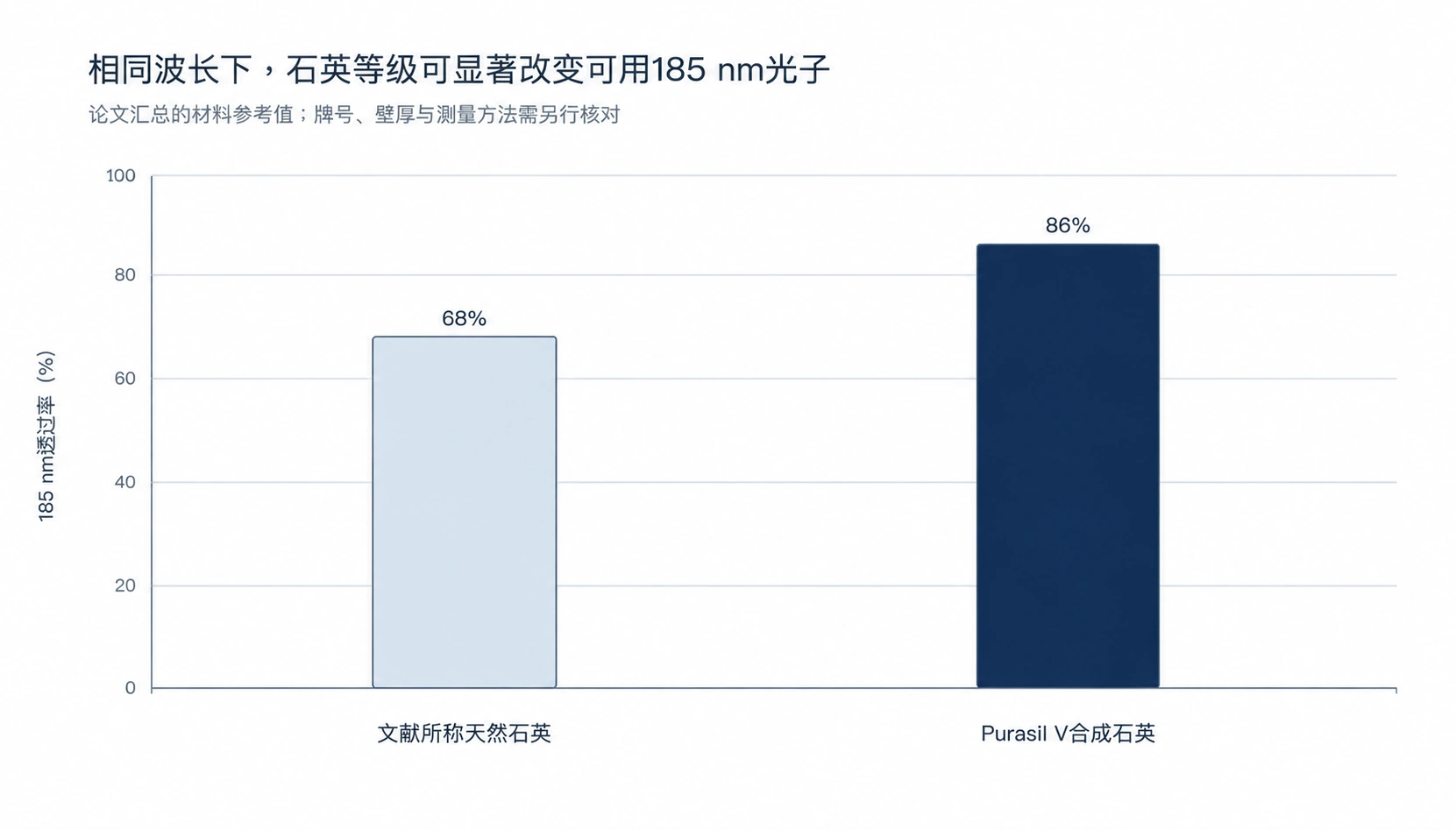
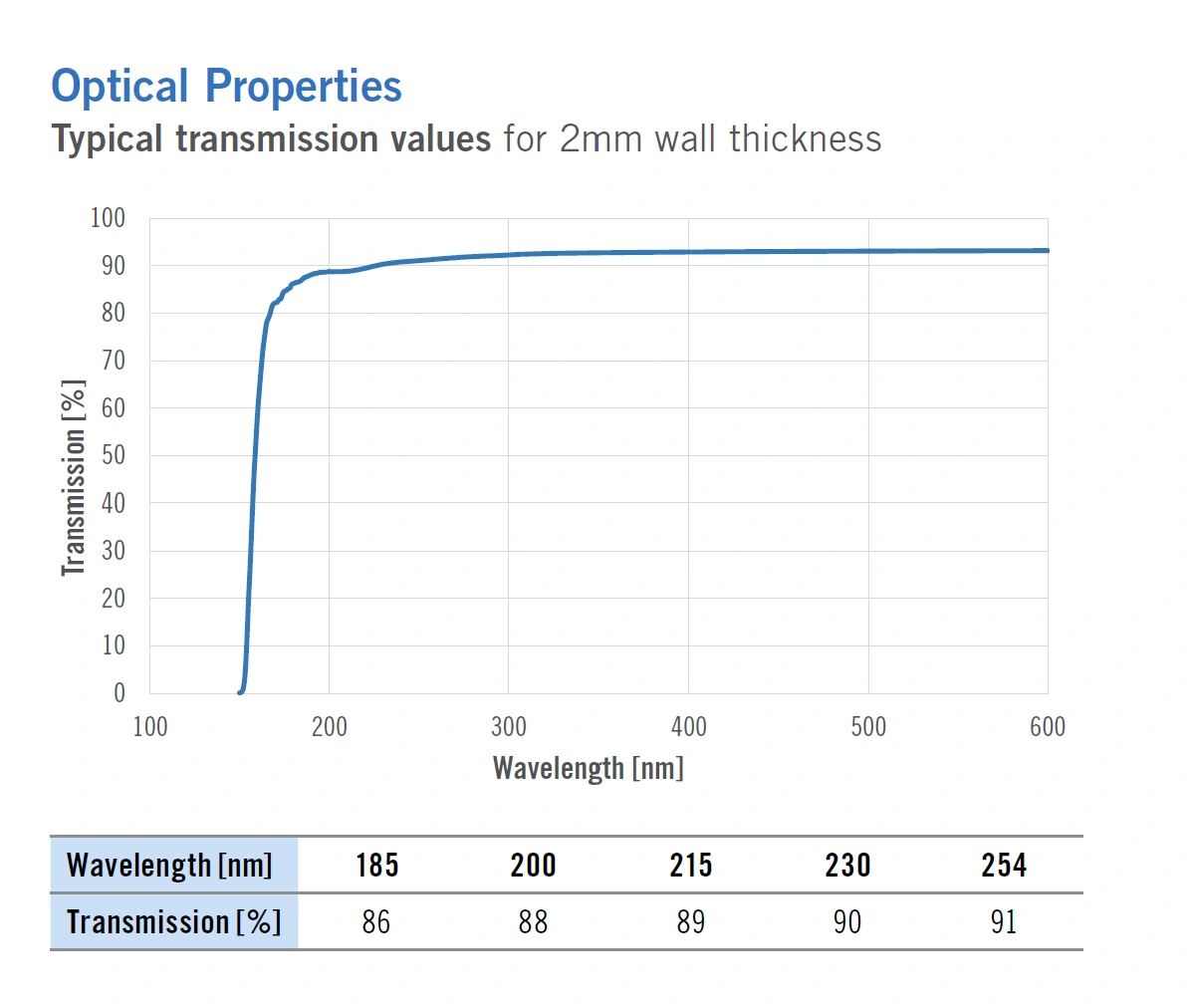
185 nm is near the short-wavelength transmission edge of fused silica. Reference values compiled in peer-reviewed literature are approximately 86% for Purasil V synthetic quartz and 68% for natural quartz. Under the same single-layer conditions, the former is approximately 26.5% higher in relative terms. Using those values for both lamp envelope and sleeve in an ideal optical budget gives approximately 74.0% versus 46.2% transmission through two layers.
How much 185 nm transmission remains after a year?
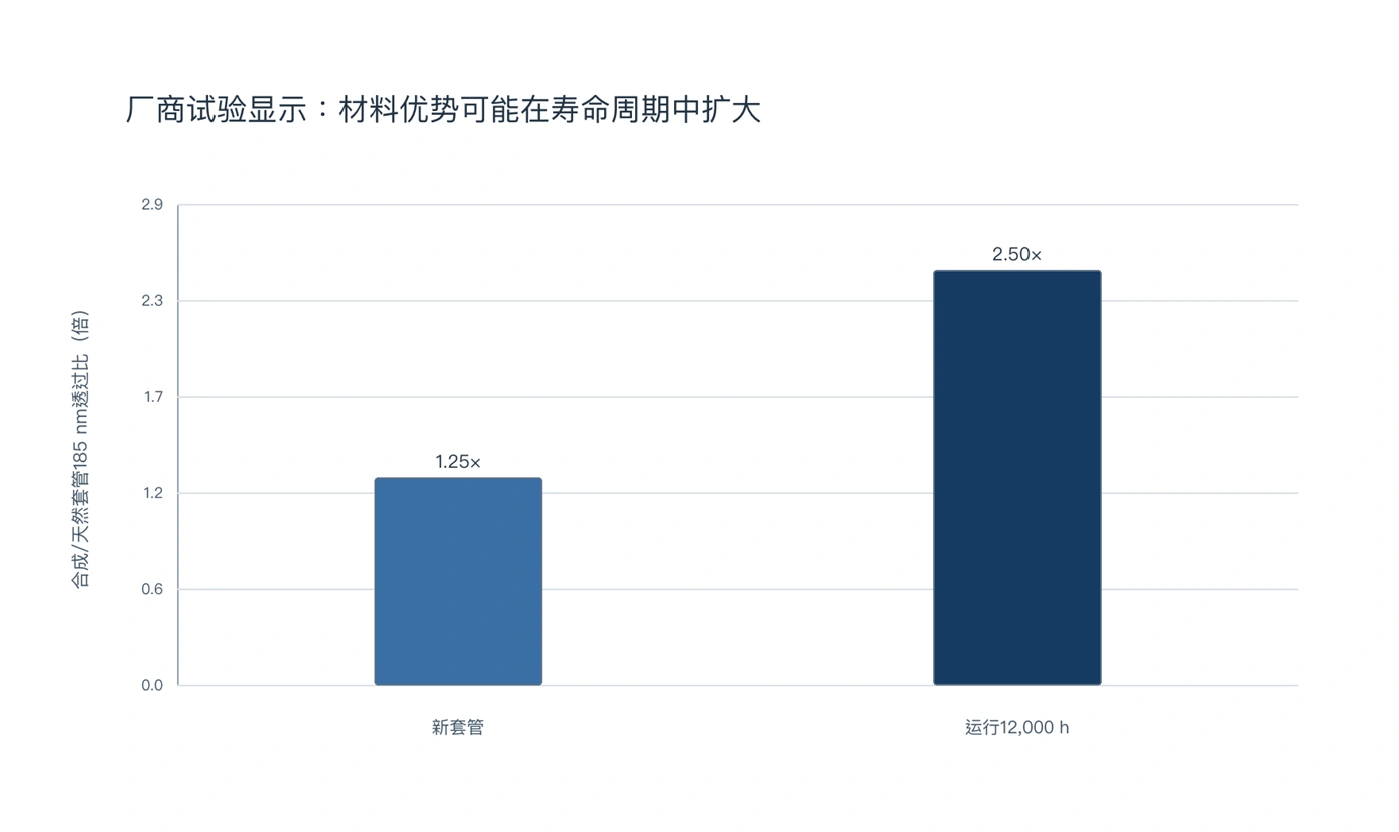
Tests showed approximately 25% higher initial 185 nm transmission for synthetic sleeves than natural quartz sleeves, and approximately 2.5 times the transmission after 12,000 hours. After one year, synthetic sleeves retained over 85% of initial transmission at 185/254 nm, while natural quartz sleeve retention at 185 nm fell below 50%.[1]
Material advantages must be demonstrated in water-side data
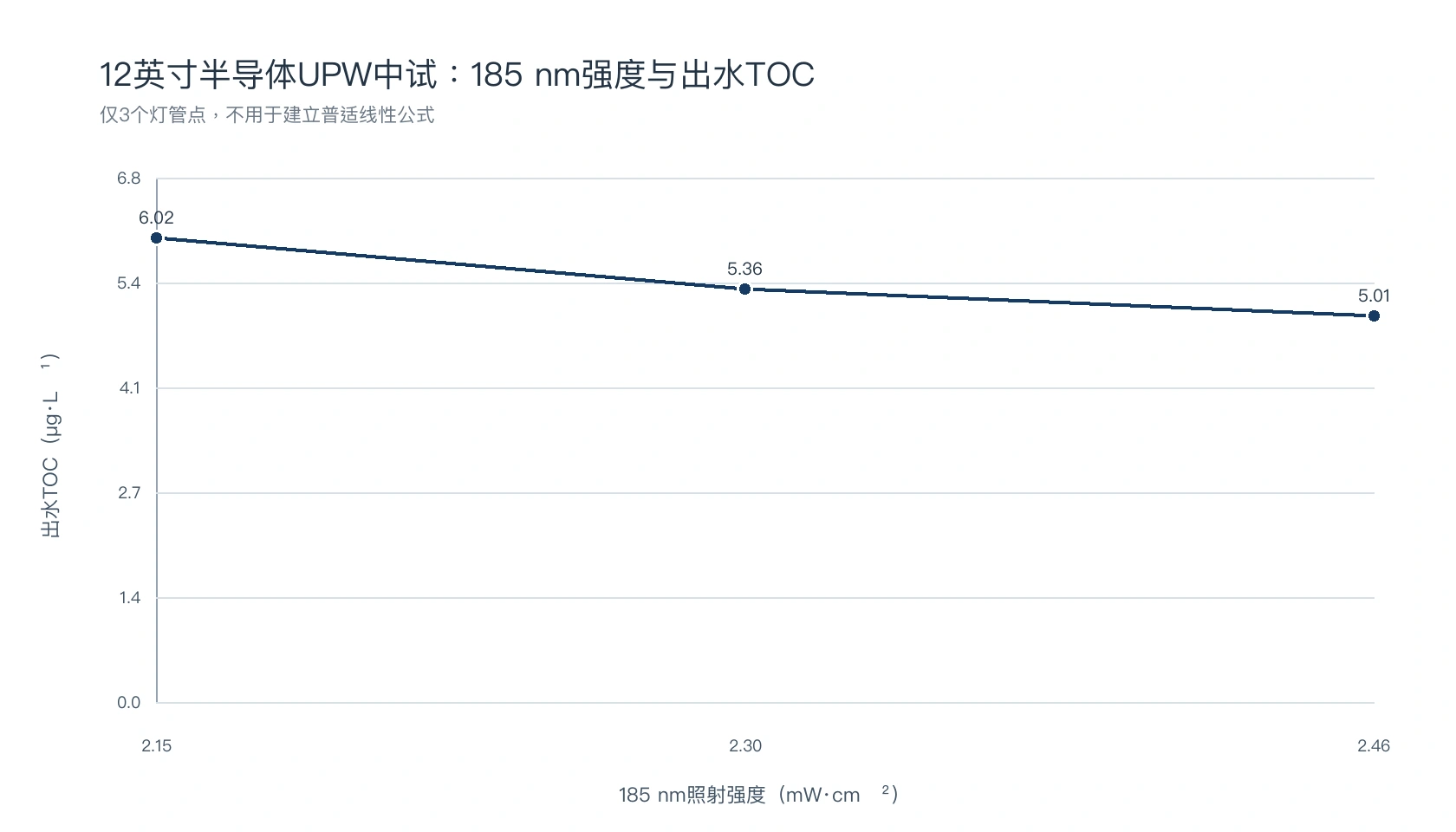
In a pilot UPW line for 12-inch semiconductors, 185 nm irradiance across three lamps increased from 2.15 to 2.46 mW·cm⁻² as outlet TOC decreased from 6.02 to 5.01 μg·L⁻¹. The 254 nm intensities did not follow the same order.[3] Three points do not establish a universal formula, but they show why a 254 nm reading or a “300 W” label cannot replace effective 185 nm output in TOC system assessment.
Synthetic quartz does not remove operating limits
Dissolved oxygen affects 185 nm methanol oxidation[4]; bicarbonate and nitrate may also compete for photons or consume radicals. Reactivity varies even more among organic compounds: urea and tetramethylammonium hydroxide (TMAH) may remain difficult to remove completely even with increased power or longer irradiation.[5] Synthetic quartz therefore improves the optical basis; it does not imply equal removal of all TOC components.
How WTU-LPS addresses these requirements
- Synthetic quartz lamp envelopes and sleeves jointly improve effective water-side transmission at 185 nm and slow VUV output decline over rated life, optically supporting stable TOC oxidation.
- At the same target TOC, minimum UVT₁₈₅ (Ultraviolet Transmittance at 185 nm, 185 nm UV transmittance) and end-of-lamp-life conditions, the 300 W high-output platform may allow a compact layout with fewer lamps, sleeves, ballasts and maintenance points.
- Output can be adjusted using real-time flow, lamp age and a validated operating envelope, meeting treatment targets while reducing unnecessary sustained full-power operation.
- Single-ended maintenance, online UV and temperature monitoring, PLC/HMI and communication interfaces provide the hardware basis for integrating lamp output, operating hours, alarms and maintenance events into UPW facility systems.
Synthetic quartz is more than a material name in a specification. The lamp envelope lets 185 nm leave the discharge zone; the sleeve transmits it into water. Initial transmission and lifetime retention through both layers determine how much electrical energy becomes usable water-side photons. Define the final solution jointly by target organics, minimum UVT₁₈₅ (185 nm transmittance), maximum flow, residence time, end of lamp life, downstream polishing conditions and sub-ppb measurement capability.
References
[1] Sasges, M. (2024). Total organic carbon (TOC) reduction in microelectronics: The advantages of synthetic quartz in TOC systems.
[2] Heraeus Conamic. (2021). Suprasil 130: Synthetic multi step quartz tube [Data sheet]; Heraeus Conamic. (2021). HLQ 200: Electrically melted single step quartz tube [Data sheet].
[3] Tian, Y., Xiong, J., Zhang, H., & Gao, K. (2024). Removal mechanism of typical trace organic pollutants in the production of electronic ultrapure water. Industrial Water Treatment, 44(9), 176–180.
[4] Choi, J., & Chung, J. (2019). Effect of dissolved oxygen on efficiency of TOC reduction by UV at 185 nm in an ultrapure water production system. Water Research, 154, 21–27.
[5] Kang, Y., Kwon, J., Kim, J., & Hong, S. (2023). Fate of low molecular weight organic matters in reverse osmosis and vacuum ultraviolet process for high-quality ultrapure water production in the semiconductor industry. Journal of Cleaner Production, 423, 138714.
[6] Choi, J., Kim, J.-O., & Chung, J. (2016). Removal of isopropyl alcohol and methanol in ultrapure water production system using a 185 nm ultraviolet and ion exchange system. Chemosphere, 156, 341–346.
[7] International Roadmap for Devices and Systems. (2024). 2024 IRDS™ yield enhancement. IEEE.
[8] Iwasaki Electric Co., Ltd. (2015). Ultrapure water production system (Japan Patent No. JP5720122B2). Japan Patent Office.
[9] Zhao, P., Bai, Y., Liu, B., Chang, H., Cao, Y., & Fang, J. (2019). Process optimization for producing ultrapure water with high resistivity and low total organic carbon. Process Safety and Environmental Protection, 126, 232–241.