
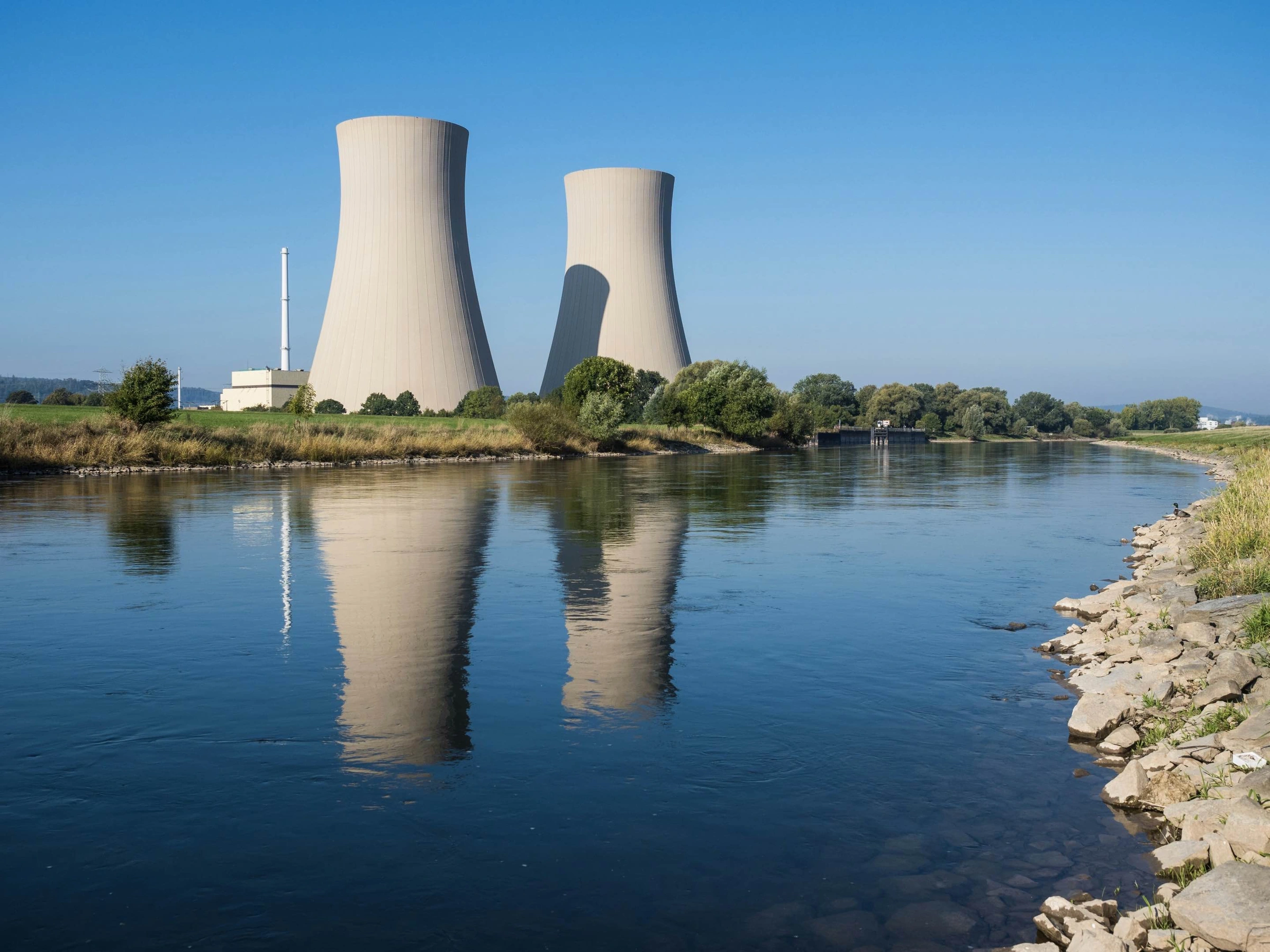
Cumulative operating losses are the real threat to membranes
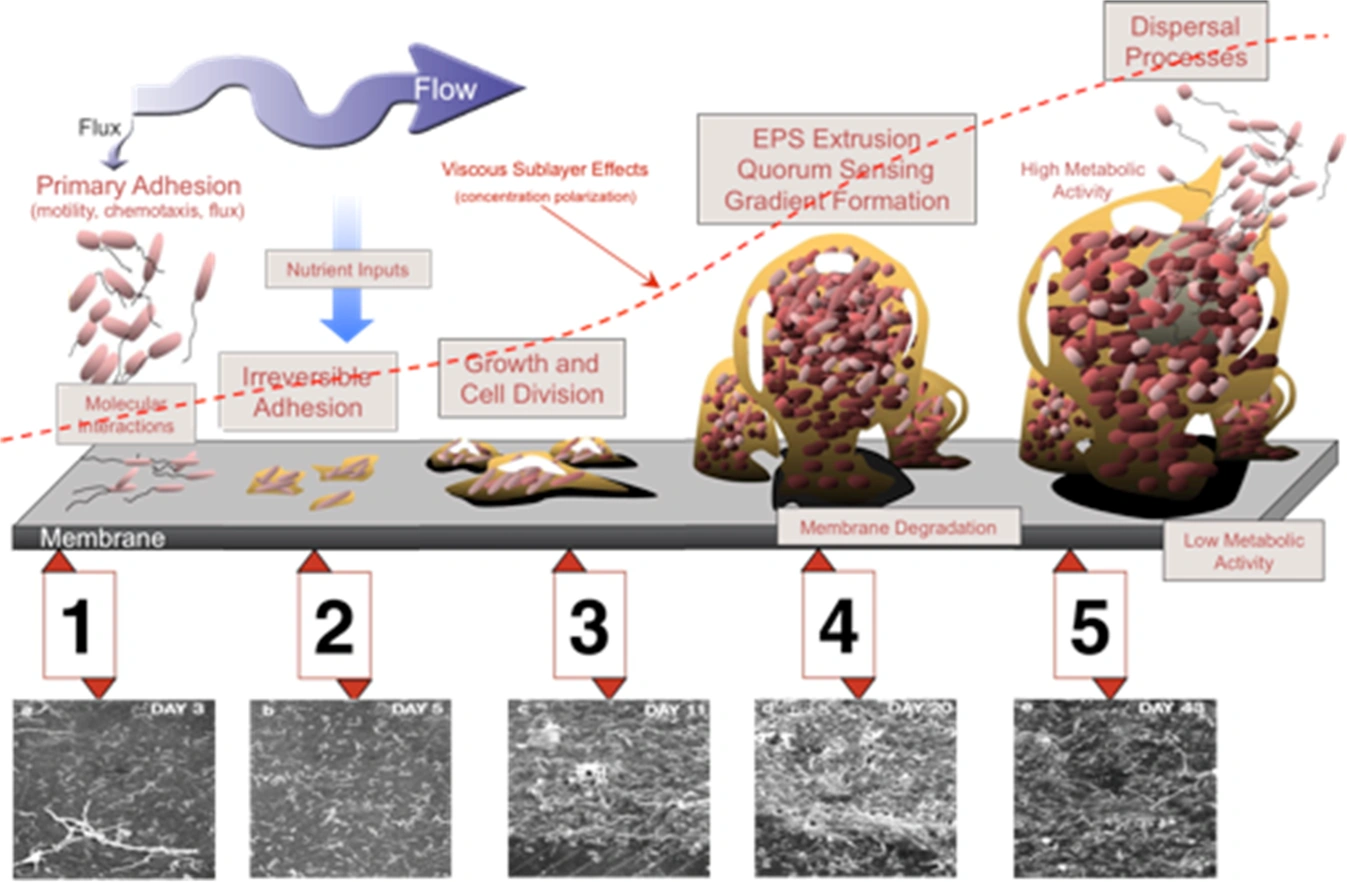
In power plant industrial water and boiler makeup water systems, reverse osmosis (RO) often plays a key role in desalination and stable permeate production. Biofouling is more than a bacterial count from a single test: microorganisms entering the membrane system attach, multiply and secrete extracellular polymeric substances (EPS), gradually forming biofilms. Feed pressure and interstage differential pressure then rise, normalized permeate flux falls, cleaning becomes more frequent, and specific energy consumption and membrane life come under pressure. A 2022 review in npj Clean Water therefore calls biofouling the Achilles heel of RO and emphasizes that control strategies must combine site water quality, upstream pretreatment and continuous monitoring.[1]
Assess operating conditions: UV upstream of RO or UF?
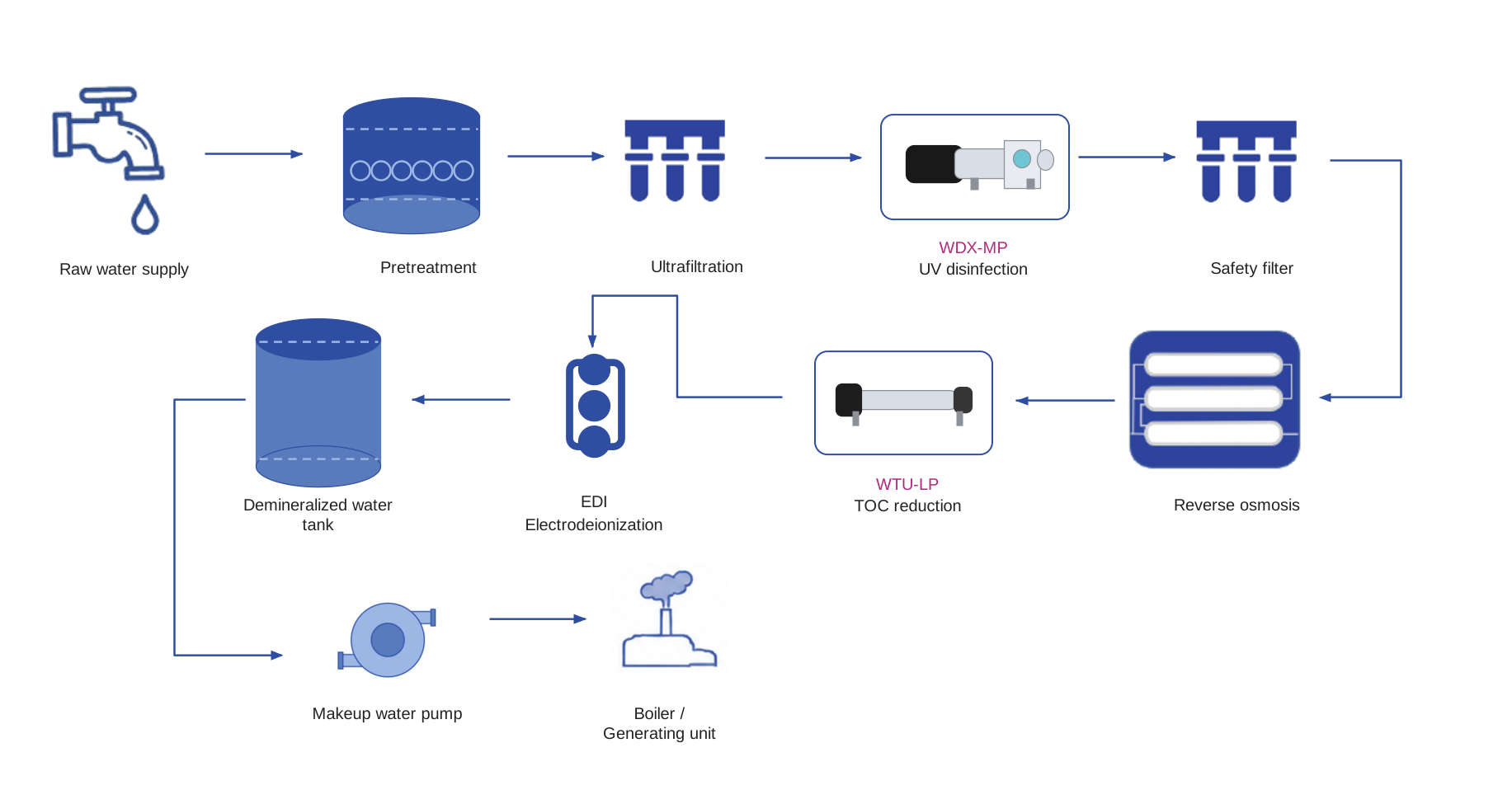
The installation point determines both the water UV must treat and the membrane stage it protects. Downstream of ultrafiltration (UF) and upstream of RO, water generally contains fewer particles and has higher UV transmittance (UVT), making dose delivery more stable and directly reducing the load of microorganisms capable of reproduction entering RO. This position does not protect upstream UF. Moving UV ahead of UF may protect both UF and RO, but entails higher instantaneous flows, lower and more variable UVT, particle shielding and quartz sleeve scaling risks.
Another position to consider is downstream of activated carbon and upstream of cartridge filtration. After activated carbon removes residual chlorine, microbial regrowth can occur in downstream piping. In one power plant case, medium-pressure UV was installed after activated carbon and before micron filtration. During the project comparison period, RO recovery increased from approximately 65% to approximately 71%, with improvements in filter differential pressure and chemical use. This illustrates an application direction but does not replace engineering calculations for the target site.
Why medium-pressure UV suits high-flow membrane pretreatment
The central challenge is high, fluctuating main-line flow and variable water quality and UVT, while sufficient dose must be delivered continuously within limited plant space. Medium-pressure lamps combine high power per lamp with multiwavelength output, allowing compact reactors with fewer lamps. Power modulation, online intensity monitoring and sleeve cleaning help address high-flow capacity, dose response and maintenance access in one system.
A full-scale parallel-line brackish water reverse osmosis (BWRO) study lasting approximately 4 months provided field evidence: normalized permeate flux declined by approximately 11% in the line with medium-pressure UV upstream of RO, versus approximately 17% in the control. Membrane-surface EPS in the UV line was approximately half that in the control; cell density and community diversity were also lower. The study suggests that reducing the upstream load of microorganisms capable of reproduction may delay hydraulic and mass-transfer resistance caused by EPS and biofilms, supporting stable RO operation.[2]
A substantiated design must address four engineering challenges
UV equipment cannot be selected solely by pipe diameter or installed power. The U.S. Environmental Protection Agency (USEPA) UV guidance emphasizes that actual dose depends jointly on flow, minimum operating UVT, lamp output and aging, sleeve fouling, reactor hydraulics and target microorganism response. Equipment must cover the actual flow–UVT combinations and be monitored and controlled within a defined operating envelope.[3]
- Dose delivery: meet the target dose at peak flow, minimum UVT, end of lamp life and with sleeve fouling.
- Hydraulic integration: balance dose uniformity, allowable pressure drop and pumping energy at high main-line flow.
- Long-term cleanliness: control sleeve scaling and sensor fouling to reduce dose loss from declining light transmission.
- Traceable operation: integrate intensity, power, flow, UVT, alarms and cleaning records into PLC/SCADA to demonstrate continuous effective operation.
How WDX-MP addresses these requirements
For high flow, variable water quality, continuous operation and limited service space, WDX-MP addresses dose delivery, power control, long-term cleanliness and operational integration as a system.
1. High-flow piping: uniform dose in a compact layout
WDX-MP uses modular configurations of 1-8 medium-pressure lamps, with 1-8 kW per lamp and DN100-DN500 inlet and outlet connections. High power density per lamp allows compact reactors with relatively few lamps for power plant industrial water mains, reducing footprint, lamp count and subsequent maintenance work.
Coordinated optical and hydraulic design provides more uniform irradiation within a limited chamber and reduces low-dose zones, while respecting allowable main-line pressure drop to avoid excessive long-term pumping energy. Lamp count, individual power and chamber size can be combined for different flows, UVT values and target doses rather than selecting solely by pipe diameter.
2. Match energy input to real-time flow and water quality
Flow and UVT upstream of power plant membranes are not constant. Continuous full-power operation for peak conditions wastes energy, while output that cannot respond promptly to water quality changes may deliver insufficient dose.
WDX-MP supports stepless power modulation from 30%-100%, dynamically using real-time flow, online UVT, UV intensity and lamp status. Power decreases automatically as flow falls or UVT rises, and increases as flow rises, UVT falls or lamps approach end of life, maintaining the target dose within the actual operating envelope.
Low-dose alarms, operating records and control outputs make demand-based modulation a means of maintaining effective dose as well as saving energy. Compared with continuous full-power operation, this approach helps reduce unnecessary electricity use and sustained high loading of lamps and electrical systems.
3. Maintain optical cleanliness through materials, hydraulics and online cleaning
Hardness constituents, iron, manganese, particles and other scale-forming components in membrane feed water may gradually deposit on quartz sleeves and reactor surfaces, reducing UV transmission.
The WDX-MP chamber is 316L stainless steel with internal surface roughness Ra 0.6 µm, optionally Ra 0.38 µm. Lower roughness helps reduce deposit adhesion and hygienic dead zones, supporting long-term clean operation. Optimized flow paths and lower hydraulic resistance also reduce local low-velocity zones and unnecessary pressure loss.
Optional automatic mechanical wiping periodically removes surface deposits without stopping the unit or removing quartz sleeves. It maintains UV transmission, reducing fouling-related dose loss and shutdowns for manual cleaning. Materials, surface finish, hydraulics and online cleaning therefore work together for long-term operation rather than acting as isolated specifications.
4. Improve availability with single-ended maintenance and automation integration
Large UV equipment must not only treat design flow but also fit plant space, continuous operation and factory automation requirements.
WDX-MP allows lamps, quartz sleeves and associated components to be serviced and replaced from the same side. This reduces the aisle and lamp-withdrawal space required by conventional double-ended maintenance. In retrofits or compact membrane plants, it helps reduce installation and maintenance space requirements and simplifies routine service access.
The control system includes PLC/HMI, online UV and temperature monitoring, and multiple safety interlocks. It records dose status, lamp hours, power, alarms and maintenance events. Industrial communication interfaces connect data and alarms to plant PLC or SCADA systems for remote status monitoring, timestamped fault tracing and maintenance planning.
WDX-MP therefore provides a membrane pretreatment protection unit that can be monitored, adjusted, logged and maintained, rather than simply a disinfection device installed in a pipe.
These features enable WDX-MP to deliver the target dose consistently under high-flow, variable-water-quality power plant conditions and control the load of microorganisms capable of reproduction entering UF or RO. Demand-based energy input, online cleaning, single-ended maintenance and automation integration also reduce lifecycle energy, cleaning and operation and maintenance burdens.
References
1. Hoek, E. M. V., Weigand, T. M., & Edalat, A. (2022). Reverse osmosis membrane biofouling: Causes, consequences and countermeasures. npj Clean Water, 5, Article 45. https://doi.org/10.1038/s41545-022-00183-0
2. Harif, T., Elifantz, H., Margalit, E., Herzberg, M., Lichi, T., & Minz, D. (2011). The effect of UV pre-treatment on biofouling of BWRO membranes: A field study. Desalination and Water Treatment, 31(1-3), 151-163. https://doi.org/10.5004/dwt.2011.2377
3. U.S. Environmental Protection Agency. (2006). Ultraviolet disinfection guidance manual for the final long term 2 enhanced surface water treatment rule (EPA 815-R-06-007). https://www.epa.gov/system/files/documents/2022-10/ultraviolet-disinfection-guidance-manual-2006.pdf